
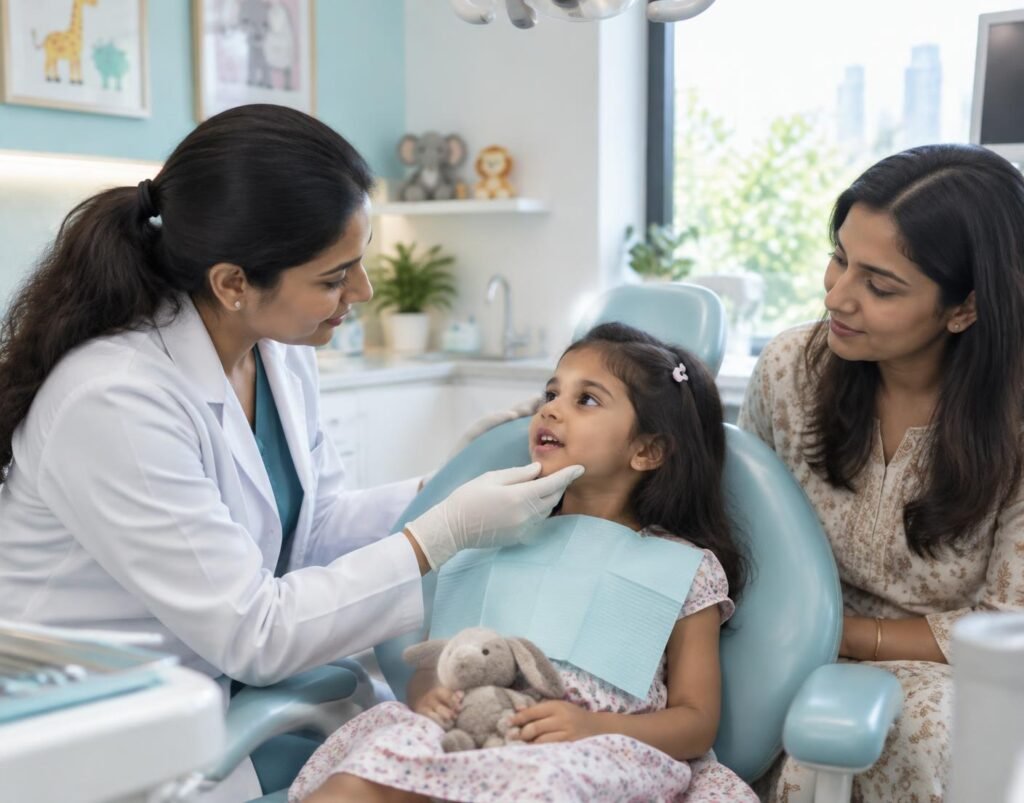
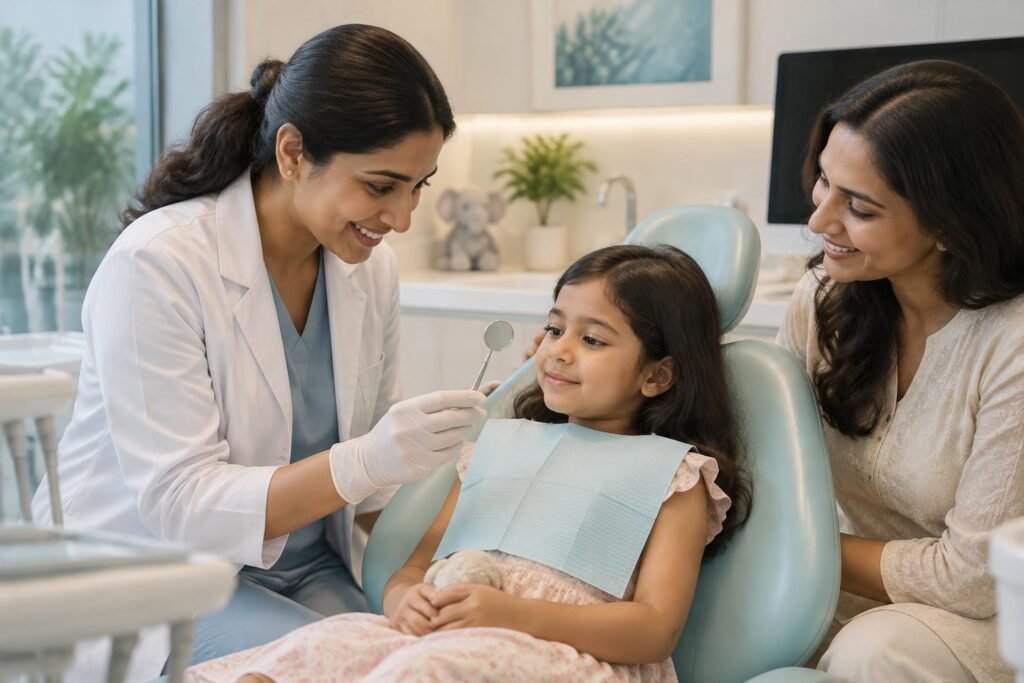
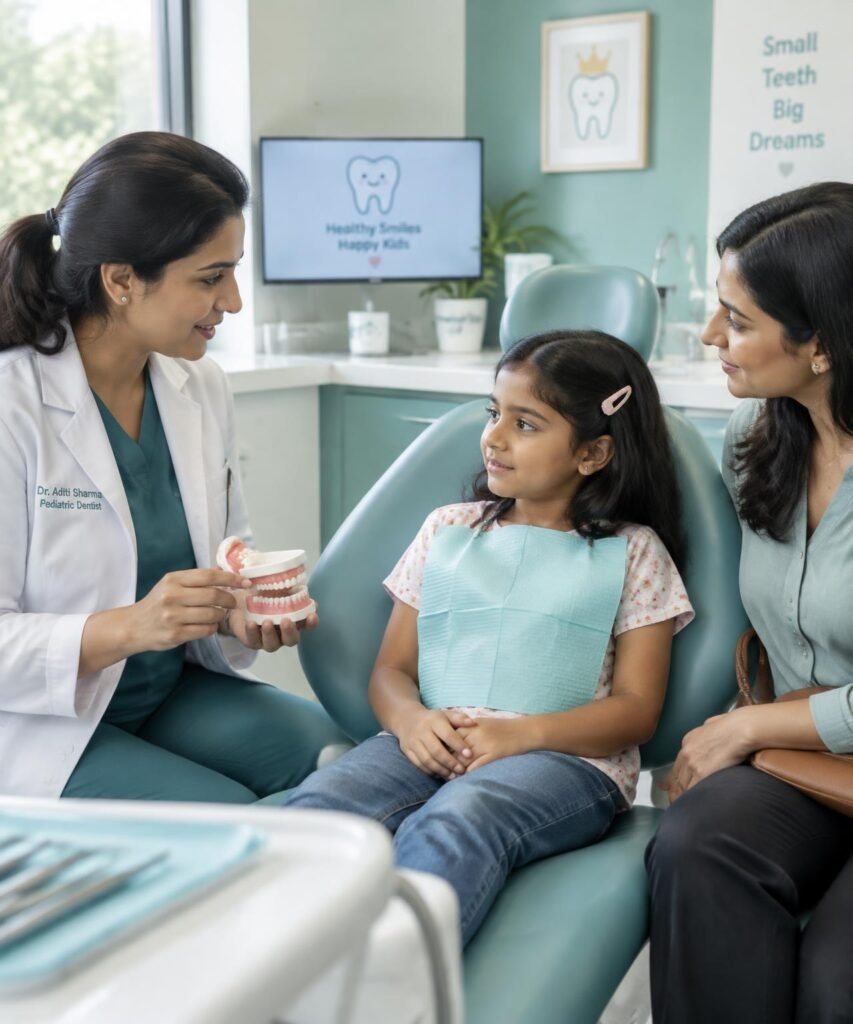
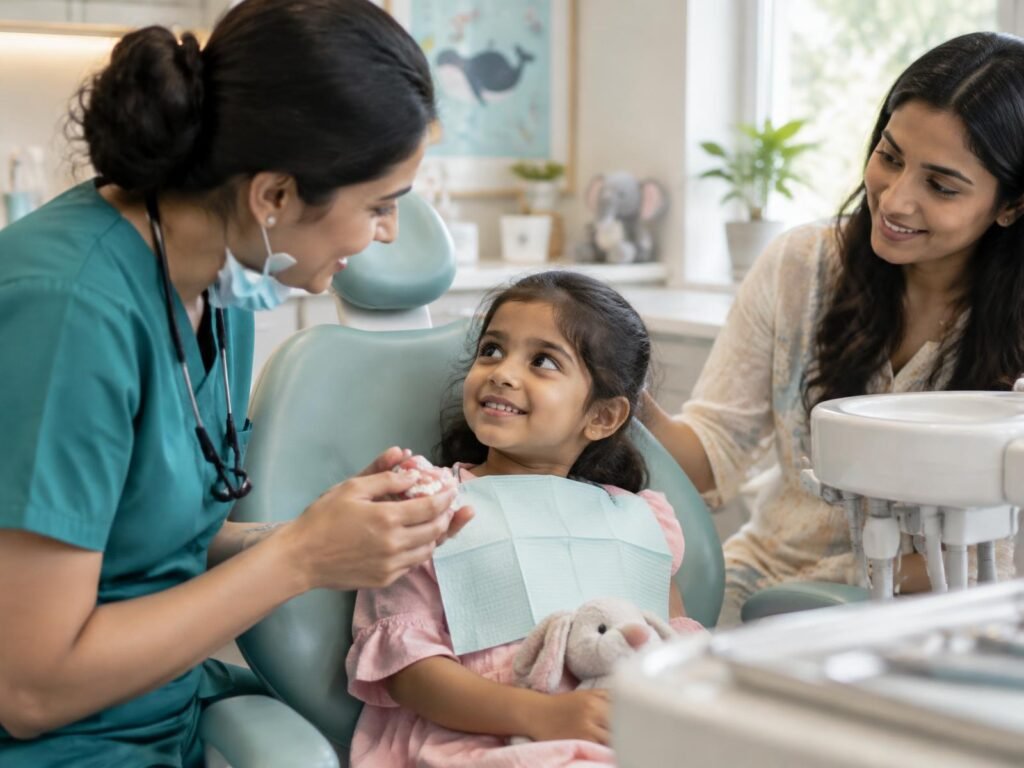
Questions are part of caring for your child.

This should not read like a generic dental clinic FAQ.
Warm
Reassuring
Expert but easy to understand
Non-judgmental
Parent-friendly
Evidence-informed
Clear and practical
- 01 About Giggles & Grins
- 02 When Should My Child See a Pediatric Dentist?
- 03 Breathing, Sleep & Airway
- 04 Tongue Tie, Lip Tie & Feeding
- 05 Myofunctional Therapy
- 06 Cavities, Fillings & Children's Dental Treatment
- 07 Sedation, Comfort & Dental Anxiety
- 08 Orthodontics, Braces & Jaw Development
- 09 Dental Emergencies & Trauma
About Giggles & Grins
What is Giggles & Grins?
Giggles & Grins is a pediatric dental practice focused on more than just teeth. We combine specialized pediatric dentistry with airway-focused, myofunctional and prevention-first care.
We look at how a child’s mouth functions — including breathing, tongue posture, swallowing, chewing, oral habits, sleep and jaw development — alongside their dental health.
What makes Giggles & Grins different from a regular pediatric dental clinic?
Our approach is function-first and prevention-focused.
We don’t only ask, “Does your child have cavities?”
We also look at the bigger picture of oral development, including breathing, sleep, oral habits, tongue function, feeding and jaw growth.
Our goal is to identify concerns early and support healthy development wherever appropriate.
Do you treat babies and very young children?
Yes. Our care extends from infancy through adolescence.
For infants and toddlers, care may include early oral assessments, feeding and oral-function concerns, and assessment of tongue or lip restrictions when clinically appropriate.
What does “airway-focused pediatric dentistry” mean?
It means considering the relationship between oral development, breathing, sleep, tongue posture, jaw growth and airway health as part of a child’s overall dental assessment.
It does not mean that every child has an airway problem.
Instead, we look for signs that may warrant further assessment or support.
What does “myofunctional” mean?
Myofunctional care focuses on how the muscles and structures involved in breathing, chewing, swallowing and oral posture function together.
Depending on the child’s needs, myofunctional principles or therapy may form part of a broader treatment plan.
What does “prevention before correction” mean?
We believe that identifying risks early can sometimes allow families to address concerns while a child’s teeth, habits and jaws are still developing.
Our philosophy is:
Fix Before Six.
Early assessment does not mean early treatment for every child. It means understanding development early enough to make informed decisions.
When Should My Child See a Pediatric Dentist?
When should my child have their first dental visit?
An early dental visit allows us to assess oral health and development, establish healthy habits and help parents understand what to watch for as their child grows.
The appropriate timing can vary based on the child’s age, development and individual needs.
Does my child need to see a pediatric dentist if their teeth look healthy?
Yes, a child can benefit from an assessment even when there is no obvious dental problem.
A dental visit can help identify early risks related to cavities, oral habits, jaw development, tongue function, breathing or other aspects of oral development.
Does my child neHow often should my child have a dental checkup?ed to see a pediatric dentist if their teeth look healthy?
The ideal interval depends on your child’s dental health, age, risk factors and treatment needs.
Your pediatric dentist can recommend an appropriate recall schedule after assessing your child.
My child has no pain. Do they still need a dental checkup?
Yes.
Many dental problems can develop before a child experiences pain. Regular preventive visits help identify concerns earlier rather than waiting for symptoms to appear.
What signs should make me bring my child in for an assessment?
Parents may want to seek an assessment if they notice concerns such as:
- Frequent mouth breathing
- Snoring
- Sleep concerns
- Thumb sucking or prolonged pacifier use
- Tongue thrust
- Difficulty chewing or swallowing
- Feeding difficulties
- Tongue-tie or lip-tie concerns
- Crowded teeth
- Concerns about jaw development
- Repeated dental problems
- Dental trauma
- Fear or difficulty coping with dental visits
Not every sign means that there is a serious problem. An assessment helps determine what, if anything, needs attention.
Breathing, Sleep & Airway
Is mouth breathing normal in children?
Persistent mouth breathing is worth discussing with a healthcare professional.
At Giggles & Grins, we may consider breathing patterns as part of a broader assessment of oral function, sleep and development.
My child snores. Should I be concerned?
Regular or persistent snoring in a child deserves attention, particularly when accompanied by other sleep or breathing concerns.
Our team can assess the dental and oral-function aspects and recommend further evaluation when appropriate.
Can a dentist help with sleep-related concerns?
Pediatric dental care can sometimes be one part of a multidisciplinary approach to sleep and airway concerns.
We assess oral structures and function and collaborate with other healthcare professionals when needed.
Does mouth breathing affect teeth or jaw development?
Breathing, tongue posture, oral habits and jaw development can be interconnected.
If your child consistently mouth breathes, it is worth discussing the pattern with a qualified healthcare professional rather than assuming it is simply a habit.
Does every child who snores need dental treatment?
No.
Snoring can have different causes, and treatment depends on the individual child.
Our role is to assess relevant oral and functional factors and guide families toward the appropriate next step.
Tongue Tie, Lip Tie & Feeding
No.
The presence of a visible restriction does not automatically mean that treatment is necessary.
The child's function, symptoms and individual circumstances need to be considered.
Yes. Giggles & Grins provides infant tongue-tie assessment and treatment.
Our approach considers feeding, oral function and the individual needs of the baby rather than anatomy alone.
Tongue movement can be relevant to feeding in some infants.
If feeding is difficult, an assessment may help determine whether oral restriction or another factor could be contributing.
We believe in collaborative care and may work alongside lactation professionals and other healthcare providers when appropriate.
Function comes before correction.
Myofunctional
Therapy
What is myofunctional therapy for children?
Myofunctional therapy focuses on improving the function and coordination of the muscles involved in areas such as breathing, chewing, swallowing and oral posture.
The specific approach depends on the child’s age and needs.
Does every child need myofunctional therapy?
No.
Myofunctional therapy is not automatically recommended for every child.
It should be considered when an assessment identifies functional concerns where such support may be appropriate.
What problems can myofunctional care support?
Depending on the individual child, myofunctional care may be considered in relation to concerns involving:
- Tongue posture
- Swallowing
- Oral habits
- Breathing patterns
- Muscle function
- Jaw development
- Other oral-functional concerns
How do I know whether my child needs myofunctional therapy?
Cavities, Fillings & Children's Dental Treatment
Do you treat cavities in children?
Yes.
Giggles & Grins provides preventive and restorative pediatric dental care, including treatment for cavities.
Do children need fillings?
If a tooth has decay that requires restoration, a filling may be recommended.
The treatment depends on the tooth, the extent of decay, the child’s age and the overall treatment plan.
Do you provide crowns for children's teeth?
Do you perform root canal treatment for children?
Yes.
Pediatric root canal treatment may be recommended when decay or injury has affected the inside of a primary tooth.
The dentist will explain why the treatment is recommended and what alternatives, if any, may be appropriate.
What if my child is scared of dental treatment?
Fear is common, and we do not believe children should be forced through dental care simply because “the treatment needs to be done.”
We focus on preparation, communication, trust and age-appropriate approaches.
Your child’s voice matters throughout the experience.
Sedation, Comfort & Dental Anxiety
Do you offer laughing gas for children?
Yes.
Giggles & Grins offers nitrous oxide-oxygen inhalation sedation, commonly known as laughing gas, when appropriate.
The dentist will assess whether it is suitable for your child and explain what to expect.
What is sedation dentistry for children?
Sedation can help selected children remain comfortable and relaxed during dental treatment.
The type of sedation recommended depends on the child’s age, medical history, treatment requirements and individual needs.
Is sedation necessary for every child?
No.
Sedation is not automatically required.
Our aim is always to use the least intensive approach that is appropriate for the child’s needs and treatment.
Will you force my child to cooperate?
What can parents do if their child is extremely anxious about the dentist?
Tell us before the appointment.
Knowing your child’s concerns in advance allows the team to plan a more supportive experience.
Children respond differently to dental environments, and there is no single approach that works for everyone.
Orthodontics, Braces & Jaw Development
When should my child have an orthodontic evaluation?
Do you provide braces for children and teenagers?
Do you offer clear aligners?
Yes.
Clear aligner treatment is available for appropriate children and teenagers after an individual assessment.
What is jaw expansion?
Why do you focus on growth-guided care?
A child’s jaws and facial structures are developing throughout childhood.
Understanding growth early can help clinicians identify concerns and decide whether observation, prevention or treatment may be appropriate.
Dental Emergencies & Trauma
What should I do if my child chips or breaks a tooth?
What if my child's tooth is knocked out?
The appropriate response can depend on whether it is a baby tooth or permanent tooth, as well as the nature of the injury.
Contact the clinic promptly so the team can guide you on what to do next.
Orthodontics, Braces & Jaw Development
Some injuries require observation while others need immediate treatment.
A clinical assessment helps determine the appropriate course of action.
Special Needs & Sensory-Friendly Dentistry
Do you treat children with special needs?
What is sensory-friendly dental care?
Can I tell you about my child's sensory or communication needs before the appointment?
Absolutely.
Parents know their children best. Sharing relevant information before the visit can help us prepare for a more comfortable and supportive experience.
Sports Dentistry
When should my child have an orthodontic evaluation?
Why does my child need a custom mouthguard?
What Happens
at the
First Visit?

Understanding your child's concerns and history
Assessing relevant dental and oral-function factors
Understanding what we see
Discussing whether further assessment, prevention or treatment is recommended
Do you offer laughing gas for children?
Yes.
Giggles & Grins offers nitrous oxide-oxygen inhalation sedation, commonly known as laughing gas, when appropriate.
The dentist will assess whether it is suitable for your child and explain what to expect.
What is sedation dentistry for children?
Sedation can help selected children remain comfortable and relaxed during dental treatment.
The type of sedation recommended depends on the child’s age, medical history, treatment requirements and individual needs.
Is sedation necessary for every child?
No.
Sedation is not automatically required.
Our aim is always to use the least intensive approach that is appropriate for the child’s needs and treatment.
Will you force my child to cooperate?
What can parents do if their child is extremely anxious about the dentist?
Tell us before the appointment.
Knowing your child’s concerns in advance allows the team to plan a more supportive experience.
Children respond differently to dental environments, and there is no single approach that works for everyone.
Parents &
Treatment
Decisions
Will you tell me what treatment my child needs?
We will explain what we find and discuss the options that may be appropriate.
Our goal is to educate rather than pressure.
Parents should have the information they need to make informed decisions about their child’s care.
Will I be judged if my child has cavities?
No.
No parent should leave a dental appointment feeling blamed.
We meet families where they are, understand the situation and provide practical guidance without guilt or judgment.
Do you recommend treatment for every problem you find?
Not necessarily.
Some findings may simply need monitoring or preventive support.
Treatment decisions depend on the individual child, the clinical findings and the potential benefits and risks of intervention.
Can you explain why a treatment is recommended?
Yes.
We believe parents deserve to understand what we see, why it matters, what the options are and what the next steps may be.
No parent should leave a dental appointment feeling blamed.
Clinic Experience
Is Giggles & Grins designed specifically for children?
Yes.
The clinic environment and approach are designed around children’s emotional and developmental needs.
The facilities include a reception and waiting area, play area, exercise pod, nursing station, dental suites, audiovisual distraction and child-friendly treatment approaches.
What technology do you use?
Our facilities include live intra-oral cameras, digital X-rays, magnifying loupes and other technology used as clinically appropriate.
Technology is there to support diagnosis, communication and care — not to make the experience more intimidating.
Do you have facilities for babies?
Chennai & Mumbai Clinics
Giggles & Grins Kids Dentistry
Giggles & Grins Kids Dental Clinic
Where is Giggles & Grins located?
Do both clinics offer the same services?
How do I book an appointment?
Booking & Practical Questions
Can I contact Giggles & Grins on WhatsApp?
Do I need a referral to visit Giggles & Grins?
Parents can contact the clinic directly to discuss their child’s needs and request an appointment.
If another healthcare professional has referred your child, you can share the referral information with the team.